

You feel a strange fluttering in your chest while climbing the stairs. Or maybe you get breathless walking to the market when you never used to. Perhaps a family member recently had a heart attack, and now every little ache makes you nervous.
If any of this sounds familiar, you’re not alone. Heart-related worries are one of the most common reasons people put off seeing a doctor, usually because they’re scared of what they might hear. But here’s the reassuring part: most heart problems are far easier to manage when they’re caught early. A simple cardiology consultation in Kandivali can give you clarity, calm your worries, and, in many cases, prevent a much bigger problem down the road.
Let’s walk through what a heart consultation actually involves, when you should book one, and how to take that first step without feeling overwhelmed.
Why Heart Health Deserves Your Attention
Heart disease has quietly become one of the leading health concerns in India, and Mumbai is no exception. Long working hours, high-stress lifestyles, irregular eating, and reduced physical activity all add up over time. What makes it tricky is that heart problems often build up silently for years before showing obvious symptoms.
That’s exactly why a cardiac check-up in Mumbai isn’t only for people who already feel unwell. Many patients discover early signs of high blood pressure, high cholesterol, or an irregular heartbeat during a routine visit, long before these issues cause serious damage.
Think of it this way: you service your car before it breaks down. Your heart deserves at least the same care.
What Is a Cardiology Consultation?
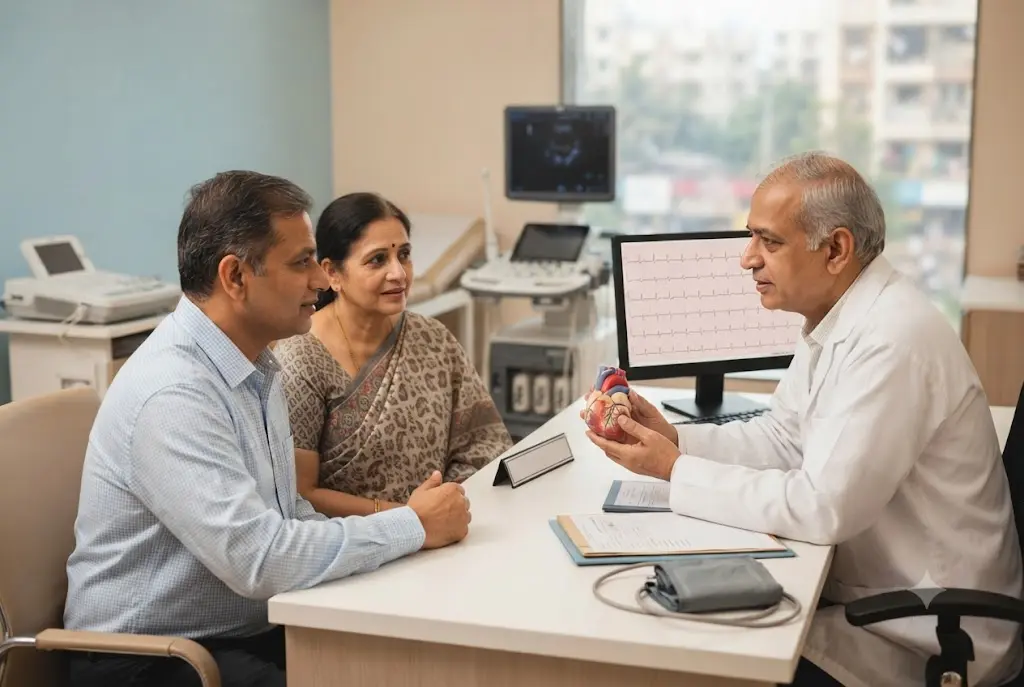
A cardiology consultation is simply a focused appointment with a doctor who specialises in the heart and blood vessels. This doctor is called a cardiologist, or more simply, a heart specialist in Kandivali West.
During the visit, the cardiologist tries to understand three things:
- What symptoms you’re experiencing
- What your risk factors are (family history, diabetes, blood pressure, lifestyle)
- Whether your heart is working the way it should
Based on this, they may reassure you, suggest lifestyle changes, order a few tests, or start treatment. It’s a conversation as much as an examination, and a good consultation should leave you understanding your own heart better.
Signs You May Need to See a Heart Specialist
You don’t need to wait for a dramatic event to consult a cardiologist. Consider booking an appointment with the best cardiologist in Kandivali if you notice any of the following:
- Chest pain, pressure, or tightness, especially during activity
- Shortness of breath that feels new or unusual
- Palpitations, a racing or skipping heartbeat
- Dizziness, fainting, or unexplained fatigue
- Swelling in the legs, ankles, or feet
- Persistently high blood pressure readings
There are also situations where a check-up makes sense even without symptoms:
- You’re over 40 and have never had a heart evaluation
- You have diabetes, high cholesterol, or a family history of heart disease
- You smoke or have recently quit
- You’re planning to start intense exercise after years of being sedentary
If you’re unsure whether your symptoms are “serious enough,” that uncertainty itself is a good reason to ask. A heart specialist would much rather see you early than late.
What Actually Happens During the Consultation?
For many people, the fear of the unknown is worse than the visit itself. So here’s a simple breakdown of what a typical cardiology consultation in Kandivali looks like.
1. Understanding Your History
The cardiologist will ask about your symptoms, daily habits, existing conditions, medicines, and family history. Be honest here, even the details that feel embarrassing (like smoking or skipped medications) genuinely help the doctor.
2. Physical Examination
The doctor checks your blood pressure, pulse, and heart sounds, and looks for signs like swelling or irregular breathing.
3. Basic Heart Tests (If Needed)
Depending on your case, the cardiologist may recommend one or more simple tests. The two most common are part of a standard ECG and 2D echo test in Kandivali:
- ECG (Electrocardiogram): A quick, painless test that records your heart’s electrical activity using small stickers on your chest. It takes just a few minutes.
- 2D Echo (Echocardiogram): An ultrasound of the heart that shows how well your heart muscle and valves are working. It’s completely painless and involves no radiation.
Other tests, such as a treadmill stress test, blood tests, or a Holter monitor (a 24-hour heart recorder), may be advised based on your symptoms.
4. Discussion and Plan
Finally, the cardiologist explains what the findings mean and suggests a clear next step, whether that’s lifestyle advice, medication, further tests, or simply a follow-up.
Who Should Consider Regular Cardiac Check-Ups?
A heart evaluation isn’t only for people in distress. It’s especially valuable if you fall into any of these groups:
- Adults above 40, even without symptoms
- People with diabetes or high blood pressure
- Those with a family history of heart attacks or strokes
- Individuals who are overweight or physically inactive
- Smokers and heavy alcohol users
- Anyone recovering from a heart-related event
That said, the final decision on how often you need testing should come from your doctor. Someone with well-controlled health may need only occasional check-ups, while others may require closer monitoring.
The Real Benefits of Not Delaying
Booking a cardiac check-up in Mumbai offers more than just test results. The practical benefits include:
- Early detection: Catching issues like blocked arteries or high blood pressure before they cause damage.
- Peace of mind: Sometimes the best outcome is being told your heart is healthy.
- Personalised guidance: Advice tailored to your body, not generic tips from the internet.
- Better long-term control: Managing conditions early usually means fewer complications and medicines later.
What Do the Results Really Tell You?
It helps to remember that no single test gives a complete picture. An ECG might look normal even when there’s a problem, and one high blood pressure reading doesn’t automatically mean you have hypertension.
This is why a cardiologist looks at the full picture, your symptoms, history, examination, and test results together, before reaching any conclusion. Outcomes and recommendations naturally vary from person to person, depending on age, overall health, existing conditions, and how early a problem is found.
If any part of your report worries you, ask your doctor to explain it in plain language. Understanding your results is part of good care.
Are There Any Risks in Getting Tested?
The common tests done during a heart consultation are very safe. An ECG and a 2D echo involve no needles, no radiation, and no discomfort. A stress test asks you to walk on a treadmill under supervision, and it’s performed carefully with monitoring throughout.
The bigger risk, honestly, is avoiding evaluation altogether when symptoms are present.
What Does a Cardiology Consultation Cost?
Cost is a fair concern, and it’s one many patients hesitate to ask about. The honest answer is that the total depends on several factors, including:
- Whether it’s a first consultation or a follow-up
- The tests recommended (ECG, 2D echo, blood work, stress test, etc.)
- Whether any specialised monitoring is needed
- Your individual medical condition
Because every patient’s needs differ, a fixed price isn’t realistic to promise upfront. The best approach is to ask about consultation and test charges directly when you book, so there are no surprises. A heart hospital in Kandivali that values transparency will be happy to explain the costs clearly before you proceed.
Simple Ways to Care for Your Heart
While professional care matters, your daily habits do a lot of the heavy lifting. A few realistic steps:
- Aim for 30 minutes of activity most days, even brisk walking counts
- Cut back on fried, salty, and heavily processed foods
- Manage stress through rest, hobbies, or breathing exercises
- Sleep well and consistently
- Take prescribed medicines regularly, don’t stop on your own
- Keep up with follow-up appointments
Small, steady changes usually protect your heart far better than dramatic short-term efforts.
Why Consider RMS Multispeciality Hospital?
For families in Kandivali West and nearby areas like Borivali, Malad, and Goregaon, having reliable heart care close to home makes a real difference. RMS Multispeciality Hospital offers cardiology services as part of its multidisciplinary care, supported by a dedicated ICU/ICCU and round-the-clock emergency and critical care.
The focus here is on ethical, evidence-based, and patient-first treatment, with an emphasis on explaining your condition clearly and keeping care affordable. If you ever need more intensive support, having emergency and critical care available under one roof adds an important layer of reassurance
Conclusion
Your heart works quietly every second of your life, and it rarely asks for much in return. A little attention, at the right time, can make a lasting difference. Whether you’re managing symptoms, carrying a family history, or simply want peace of mind, a timely cardiology consultation in Kandivali is one of the most practical health decisions you can make.
You don’t need to wait for something to go wrong. Understanding your heart today means fewer worries tomorrow.
If you’ve been putting off a heart check-up or have concerns you’d like answered, consider speaking with a qualified cardiologist. The team at RMS Multispeciality Hospital, Kandivali West, is available to guide you through a proper evaluation and help you understand what your heart needs. Reach out to book a consultation whenever you’re ready.
Frequently Asked Questions
1. When should I book a cardiology consultation in Kandivali?
Consider a consultation if you have chest pain, breathlessness, palpitations, dizziness, or swelling in the legs. It’s also wise if you’re over 40, have diabetes or high blood pressure, or have a family history of heart disease, even without symptoms.
2. What tests are usually done during a heart check-up?
The most common are an ECG and a 2D echo, both quick and painless. Depending on your case, the doctor may also suggest blood tests, a treadmill stress test, or a Holter monitor.
3. Is an ECG and 2D echo test painful?
Not at all. Both are non-invasive, involve no needles or radiation, and usually take only a few minutes each.
4. How often should I see a heart specialist in Kandivali West?
It depends on your age, risk factors, and existing conditions. Some people need only occasional check-ups, while those with diabetes, hypertension, or heart disease may need more regular monitoring. Your cardiologist will advise the right frequency.
5. Can heart problems exist without any symptoms?
Yes. Conditions like high blood pressure and high cholesterol often develop silently for years. This is why routine cardiac check-ups are valuable even when you feel fine.
6. Do I need a referral to see a cardiologist?
Usually not. You can book a consultation directly if you have symptoms or risk factors. However, your family physician may also refer you for specialised evaluation.
7. What is the cost of a cardiology consultation in Mumbai?
It varies based on the type of visit and the tests recommended. It’s best to ask about consultation and test charges when booking so you know what to expect beforehand.
8. Are lifestyle changes enough, or will I need medication?
That depends entirely on your condition. Some people manage well with lifestyle changes alone, while others need medicines. Your cardiologist will recommend what’s safe and suitable for you.
9. Does RMS Multispeciality Hospital offer emergency heart care?
RMS provides cardiology services along with ICU/ICCU support and 24×7 emergency and critical care, which is important for situations that need urgent attention.
10. I’m nervous about my first consultation. How should I prepare?
Note down your symptoms, carry any past reports and a list of your medicines, and wear comfortable clothing. Being honest about your habits helps the doctor give you the best advice.